Reform UK last minute accounts filing
On 25 June 2026, Reform UK, the political party, filed accounts for the 2025 calendar year with the Electoral Commission.
Reform UK is the only major political party in the UK that is also registered as a company at Companies House.
Consequently, each year, they must file a set of accounts, with an auditor's report, at Companies House. The deadline was today, 30 September 2026. Why did they file the accounts at the very last minute and not at the same time they filed with the Electoral Commission?
Click here to see the filing history and access the other accounts.
As explained in my previous blog on the subject, the reports given to Companies House are slightly different from the reports given to the Electoral Commission. The Electoral Commission is trying to show the impact of money on democracy. The Companies House report aims to give members, investors, trading partners and employees an image of the organisation's strength or weakness.
The document uploaded to the Electoral Commission in June is a text-searchable PDF. The PDF uploaded to Companies House is not text-searchable. However, Companies House also has another copy in iXBRL, which is an XHTML file that is text-searchable in a web browser.
At a glance, we can see the numbers are not exactly the same. For example, the membership revenue in the report to the Electoral Commission appears to be a bit higher because they used to collect the money through a different company and then they subsequently merged the two companies during the 2025 reporting year.
Like the report submitted to the Electoral Commission, the report submitted to Companies House does not mention the potential impact of the new, backdated restrictions on donations from overseas electors. If those restrictions are implemented soon, they will have a very severe impact on Reform UK. It seems odd to me they can completely omit that from the statement about the company being a going concern for the next 12 months.
One of the very significant differences in the Companies House report submitted today is on the very last page. It is the declaration about how they merged the two former companies and who really has control over the company, which is acting as a political party but is really a business:
19. Related party transactions
On 19 February 2025, the company acquired the entire issued share capital of Reform 2025 Ltd for consideration of £15.
...
20. Controlling party
The company is limited by guarantee and has no share capital. The company has two members, who have equal voting rights. Neither member has individual control of the company and, accordingly, there is no ultimate controlling party.
...
Legal form of entity and country of incorporation
...
The company is limited by guarantee and has no share capital. The liability of each member is limited to £1, being the amount that each member undertakes to contribute to the assets of the company in the event of its winding up. There were two members at the year end.
Looking at the full list of documents on the Companies House web site, we can find the first document filed when the company was created. They tell us the two real members of the company are Nigel Farage and Zia Yusuf.
Companies limited by guarantee in the UK are a special type of company that is normally used for non-profits and charities. In some non-profits, like sporting clubs, every member is really a member of the company and invited to the annual general meeting.
The accounts that Reform UK has just filed show us they have a two-tier membership structure, similar to the scandal of the FSFE misfits.
People who "join" Reform UK and pay £25 per year are not really members like Nigel Farage and Zia Yusuf are members in the accounts.
In UK law, the real members, Nigel Farage and Zia Yusuf, can choose to change it into a normal shareholder company at any time they want and then they can sell the shares or pass them to their children, as long as the articles of association permit that.
In June 2025, Zia Yusuf resigned from Reform UK and came back two days later. The accounts show us that he resigned from his position on the board but they do not tell us if he transferred his position as one of the two controlling members to somebody else.
Reform UK claims to have more members than any other political party in the UK. These accounts tell us their company only has two members, making it one of the smallest political parties at the same time as being one of the biggest.
If the members accept this two-tier structure, does that mean it really is a cult, as we were told by Rupert Lowe?
When they changed the structure, they told people they were making it more democratic. What they really did is they reduced their risk. If it fails, they only lose their guarantee, which is £1 each. If it succeeds, these two people can choose to pivot back to a shareholder company form, issue shares and sell them on the stock market.
The other thing they did through this reoganisation is obfuscating the history of disputes and judgments against the former company. It looks like at least one law suit is still progressing against the old company and it is not clear if the new company structure will be obliged to pay for it if they lose.
The UK permits directors, company secretaries and shareholders to be nominees, in other words, proxies contracted to obey the person who really pays them to perform that role. While Nigel Farage and Zia Yusuf are listed publicly as the members who founded the new entity in February 2025, there is no obligation for them to publicly identify any transfers of these memberships to other people. The only thing we can deduce from the report is that there are currently two members, the same number of members they had when they created the entity but not necessarily the same two people.
Read more about the various judgments in the history of Reform UK Party Limited.
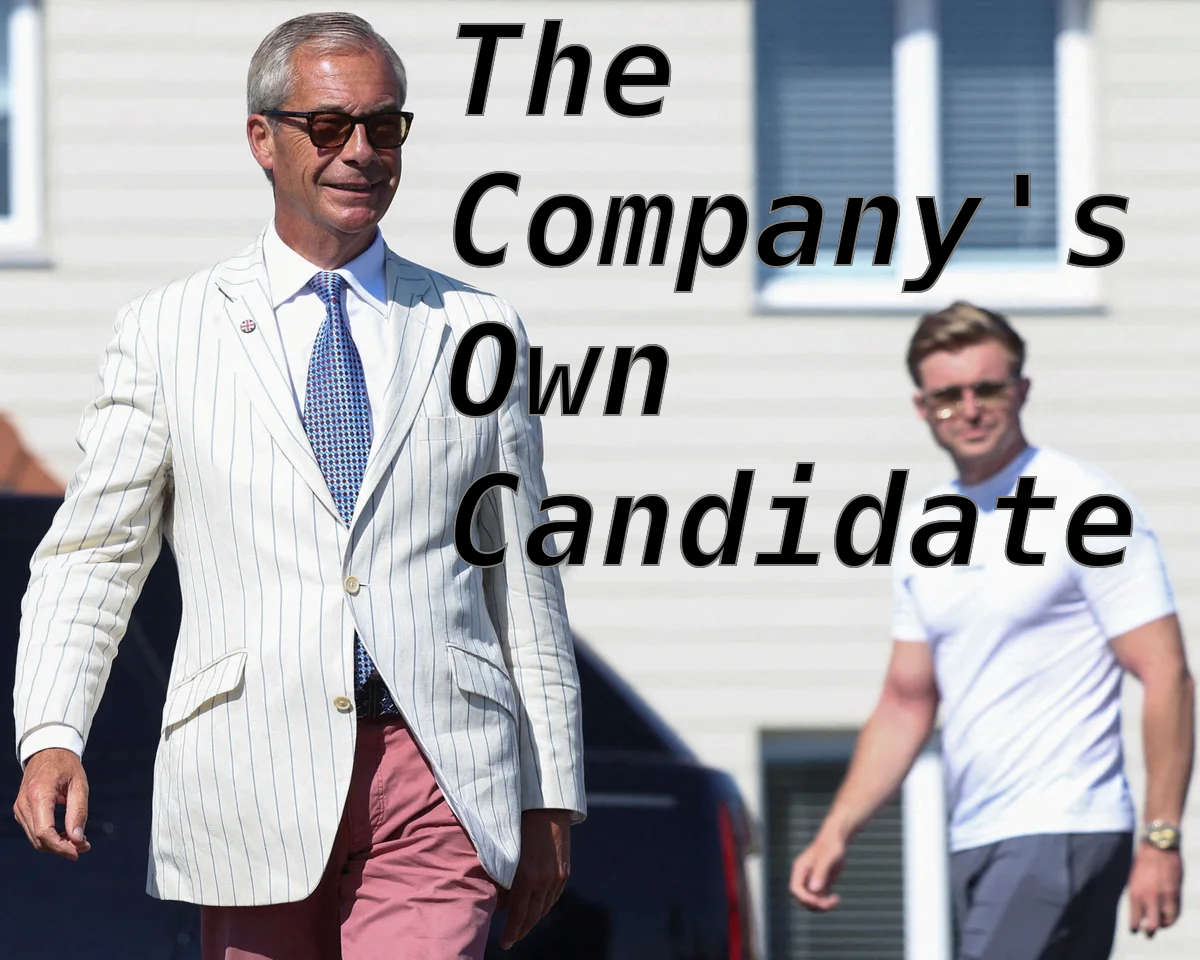
Read more about the various judgments in the history of Reform UK Party Limited.