Eurozone: Bulgaria, Russian dirty tricks, Gold & Silver bullion
Bulgaria joined the European Union in 2007 and they anticipate adopting the Euro as their currency on 1 January 2026.
The decision to use the Euro has been divisive. Polls suggest that a majority of citizens would prefer to defer or completely cancel the decision to adopt the Euro. Everybody from the political parties to the Russians are getting in on the conflict. At the beginning of December, the Bulgarian parliament was asked to consider putting the Euro to a referendum.
The ECB is prepared for anything
The European authorities understand that if Bulgaria changes their mind or if the Euro transition flops badly, it could have major ramifications for every other country who is already part of the Euro.
In particular, ever since banks began using currencies that have no link to gold and silver, the currencies have been entirely dependent on public perception. A Euro rejection or flop in Bulgaria would undermine perception in unpredictable ways. Other countries would think twice before joining in the future.
With that in mind, the banks have well and truly prepared for every imaginable disaster, whether it is the accidental death of a prime minister or Russian cyberattacks.
Gold and silver: the silent referendum
While the Bulgarian public did not get to vote on the Euro per se, they are voting with their wallets. Reports claim that Bulgaria, the poorest country in Europe, is now the third highest country on the table of private bullion ownership.
Eurozone inflation and the price police
As in previous Euro changeovers, the authorities have promised that price police will check the prices of essential goods and services in a range of businesses before and after 1 January. Businesses who obviously increase their prices and blame the Euro have been threatened with punishment.
In practice, we've seen that businesses in other countries have found indirect ways to work around inflation. For example, in Ireland, a lot of restaurants periodically make a complete overhaul of their menu. They change the ingredients and serving sizes and there is no easy way to make a like-for-like comparison to the menu before Ireland got the Euro many years ago.
On top of that, businesses that don't increase their prices will probably fail completely. New businesses will appear and replace the old businesses. The new businesses will charge new prices and the price police will not be able to punish them because they didn't exist before the Euro changeover.
Inflation in a picture: gold and silver prices
The gold and silver prices in the media typically show a chart that is always going up.
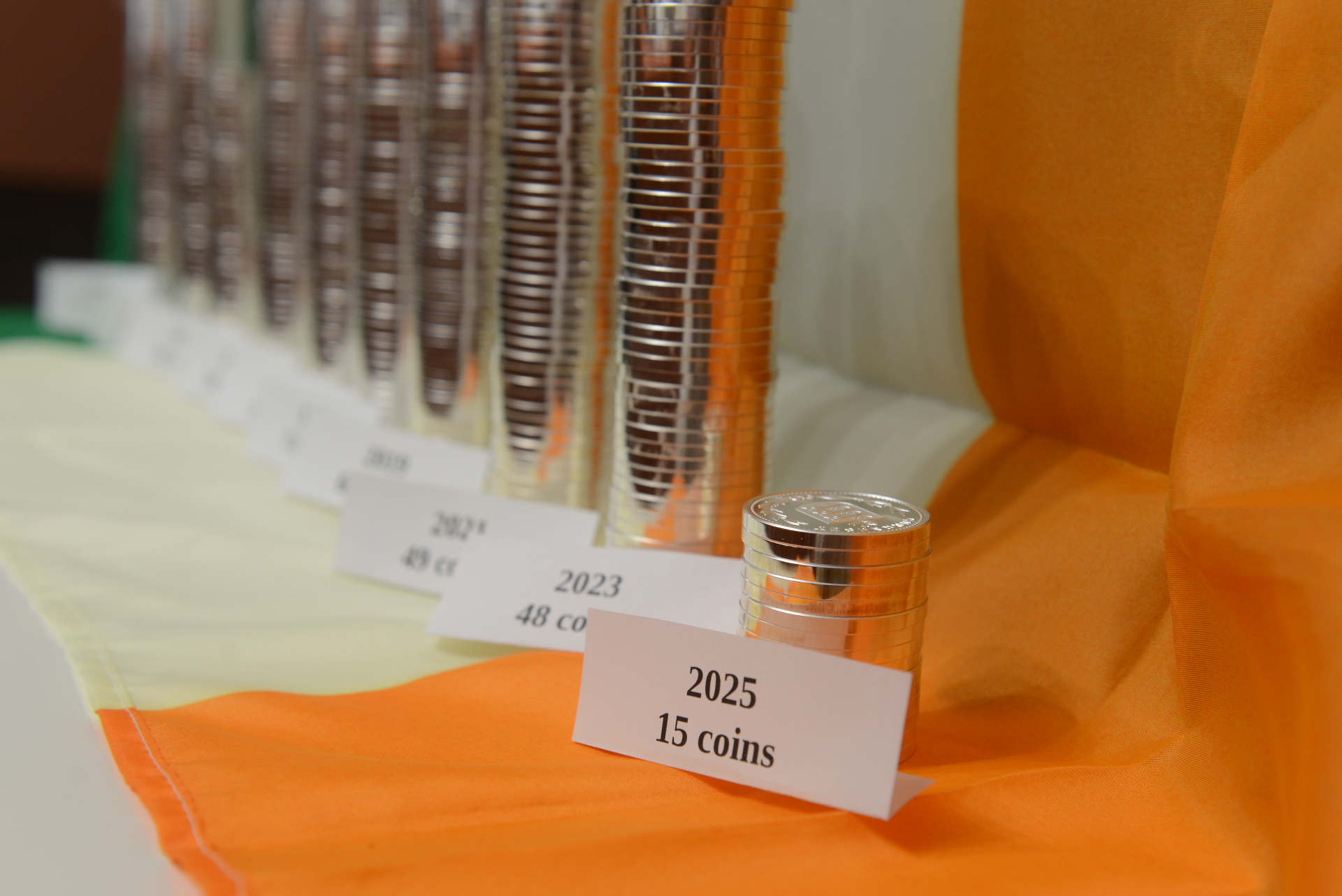
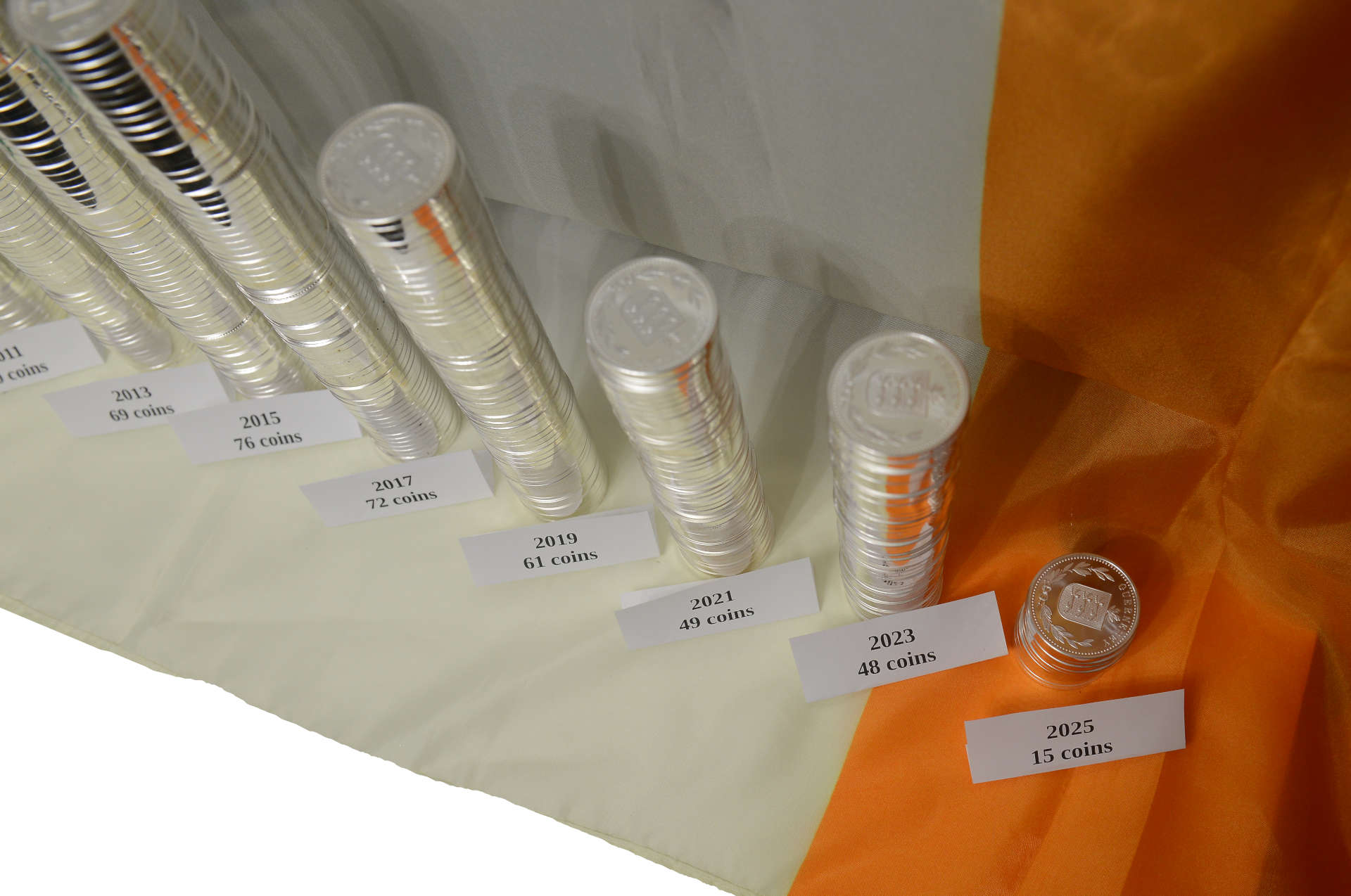
A far better way to look at the prices of these metals is to ask if you took one thousand Euro from your salary and invested it in silver every December, how many coins would you get?
Somebody made a "chart" by stacking the silver coins they acquired over more than twenty years. It has got people talking in Ireland. In 2007, when Bulgaria joined the European Union, one thousand Euros could buy 92 silver coins. Today, one thousand Euro only buys fifteen coins.

BullionVault may stop giving away free silver
The well known BullionVault web site currently puts 4 grams of free silver into each new account. The new normal for silver prices may make them downgrade this policy and future customers may only get 2 or 3 grams free.
The terms and conditions discourage people from creating multiple accounts in their own name. There appears to be no reason multiple people in the same family, for example, the husband, wife and each child can't each open an account and claim 4 grams of silver in their own name.
Now that I've speculated about that, look out for new terms and conditions that limit the free 4 grams of silver to one person at the same address.